WUN4ALL
WUN's mission is to help women to connect with other women, so they can share learnings, build confidence, and develop their own passion for the fast moving utilities space. Through our podcast episodes, we aim to provide our listeners with the skills they need to build long-lasting and fulfilling careers in the sector.
Find us at: thewun.co.uk
WUN4ALL
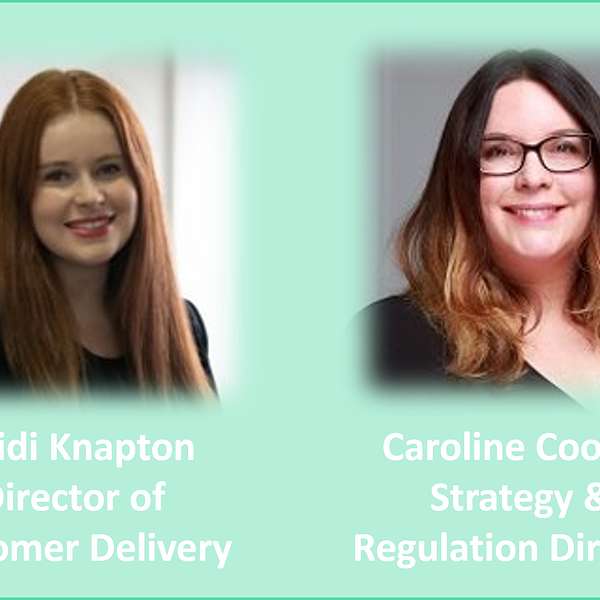
Ep. 38 .The Power of a Women's Network - Lessons Learned - Cath Jeffrey, Southern Water, Caroline Cooper, South Staffs & Cambridge Water & Heidi Knapton, South Staffs Water
In this WUN episode Heidi Knapton talks to Caroline Cooper, South Staffs Water and Cath Jeffrey (formerly Southern Water) on lessons learned from the Women’s Network at Southern Water - the power of coming together to tackle topics such as diversity, recruitment strategies and imposter syndrome.
Welcome to the Women's Utilities Network One for all podcast. Our corner of the world, where we'll be talking all things energy water, sharing personal stories and debating female issues.
Speaker B:Enjoy.
Speaker C:So welcome all our listeners to our next podcast as part of the Women's Utilities Network. I'm joined by two fantastically strong women today. Really honoured to be speaking to them both and I will let them introduce themselves in a second. And the subject of today's podcast is the power of a Women's Lessons Learned from Southern Water. This is super exciting for Caroline and I. As we're from South Staswater, we're going to get loads of lessons from Cath and hopefully all our listeners will as well, which is brilliant. So very excited. So, Cath, do you want to introduce yourself to our listeners?
Speaker B:Yeah, absolutely. So lovely to meet you both. I'm Cath Jeffrey and I'm head of HR at Southern Water.
Speaker C:Fabulous. Thanks, Kathy, Caroline.
Speaker A:Thanks, Heidi, and thanks, Kath, for joining us. Really, really appreciate your time. My name is Caroline Cooper. I'm Astra and Reg, Director here at South Staffs in Cambridge Water.
Speaker C:Brilliant. Thanks both. And just for our listeners, I think you've heard my dulcet tones a few times. But Heidi Knapton, director of Customer Delivery at South Staff's Water and very honoured to be an advocate for the Women's Utilities Network also. So I get to do lots of these podcasts and blogs and it's really great. So let's get straight to it then. Kath, tell us about the Women's Network at Southern Water. Tell us what it's about and sort of, you know, the mission that it has at the mom.
Speaker B:So, I mean, it's coming up to its first year anniversary. Starting from the beginning, we had an ambition at Southern Water to set up various employee resource groups. So we've got bu, which is our lgbtqt, We've got people with care responsibilities, different range of resource groups. One of them was a women's network and it was actually set up before became chair. The setup had a small number of women, say 20 or 30 women were part of the network. I think they met fairly regularly. We kind of weren't getting traction on anything. It was more of a sort of get together, have a good chat. Cathartic, you could say, and that kind of was it. So I was having a conversation with our Edna lead, probably about this time last year, and talking about the different employee resource groups, and she sort of mentioned to me, do you know what? We haven't got somebody who can chair The Women's Network at Southwater. Is that something you'd be interested in? And to be honest with you, I'd never really thought of doing something like that before. I gave it some thought and realized actually I'm actually quite passionate in this space. And I was going to put myself out of my comfort zone and yeah, put myself forward to sort of have some ambitions to grow the group or the network should say and see what I could do with it. And the rest you could say is kind of history. But it sort of grew pretty, pretty quickly. And I can tell you a little bit more about that in a minute. But actually the main thing for me was to sort of like reset the group because like I say, it did exist and kick off with what we wanted to call sort of like a Women's Network conference, that this is the network, this is what we stand for. Come and join and be part of it. And this is the sort of thing that you probably will have seen is that we went with a Big bang in March last year. March, sorry, earlier this year, our first Women's Network conference, which was attended by about 250 colleagues, all different people from the industry, et cetera, and blew me away pretty much. So that was. It was a strong start.
Speaker C:So that's amazing. 250 colleagues is really impressive to get that buy in across the business. That's amazing. And I guess one of the things I was interested in because being a part of the Women's Utilities Network itself as well, we're always trying to sort of establish what our member offer is. And I think that's one of the things I struggle with when I started to think, well, how could we introduce it South Staff's Water? Because I know I'm really passionate about it, I know I want to make a difference in this space, but then I need to sort of bridge the gap to, okay, well what are we offering the members that actually join? So how did you work through that caf? How did you get to that?
Speaker B:I mean, I think that's a work in progress, to be honest with you, because relaunching the Network and doing do this huge Big bang conference with loads of ideas and, you know, we all came away from that buzzing, we must do this. We'll do a Care Passport, which in fairness we have done, which was an amazing initiative that came from the network, all these different things we want to do. We have a monthly networking slot in the diary, the calendar events I plan. So working very closely with people like business in the community. So they're Actually coming to do a session for October Networking next week on Bystander Intervention. What became apparent was that every month it became more of a sort of let's do a webinar and listen. And that was really, really great. But I noticed that since the conference had happened we were losing the networking part, which is one of the bits that everyone thought was really good. So at the conference we had awesome speakers, we had market stores etc, but the main feedback we got back was do you know what? I've never been able to network with colleagues in the business in this way. Just, you know, to have a chat, have a coffee, that kind of thing. Yeah, I think the important thing for the network is to sort of remember that element of it. And that's one thing I would advise you both if you're setting up. I got quite carried away with like I'll get people in, we'll do, we'll do training and development and you know, information on menopause and stuff like that. But you kind of then lost, I lost the thread of like what is really good is just that space to talk to other like minded people. And I think one of the things I will say on our women's network is it is not exclusive for just women. So we have a small number of colleagues who are part of the network who are men. And that's really important to me because I wanted it to be a really inclusive network. I'd like to grow the membership in that space but I've had some lovely messages back from men that said, oh, I've sat on the menopause networking webinar and it's been really great because I've been able to go back and talk to my partner and see how I can support or support my team members differently. Do you see what I mean? I don't think that's what makes us different, but I'm not convinced every women's network is as inclusive in that space. So that's something I would really recommend.
Speaker A:Heidi, I've got loads of questions off that.
Speaker B:Can I jump in? I think I went on a tantrum there.
Speaker A:Sorry, go for it. So one of the things I was wrestling with is what's the kind of overarching objective of the group and is it a network or is it like you say, I'm like you Kath. I was already thinking of topics and you know, webinars and sessions and gosh, you must be able to evidence the learning or something. Almost like a blooming CPD kind of approach to it and actually what Is in one line, what's the objective of the network? Is it that safe space? Is that, Is that what you think? Is that what it is?
Speaker B:I'd like to think it was a safe space, but I think, I think like you, I've probably picked on a few things. I'm interested in that or I want to hear a bit about that, or I want to do a bit of networking. But for me, yes, safe space. But for me, I think that the single objective is to create a platform, an equal platform to talk about issues or areas of interest pertinent to women and be able to sort of move the dial in the business on it. So like I say, next week, bystander intervention or, or talking about menopause or talking about. We had Unison come and join us and did a session about how to, how to feel safe, which, you know, is inclusive of all, but giving that platform to be able to have those conversations.
Speaker A:That sounds really cool and I think you touched on it as well. And it was something Heidi and I were discussing earlier around that inclusivity piece, I think, because I was worried that a women's network, you could almost get some barriers going up. How did you get that diversity of membership? How did you encourage the inclusivity?
Speaker B:I guess, I mean, that's a work in progress, right? So I mean, I haven't done the detailed stats, but I'd say for. In our membership at the women's site, probably only 10% are not women. And it's something I do want to grow, but I've been really, it's been really important to me since when we started with that conference is that every comms that we do, it's important to sort of say, yes, it's called the women's network, but it's actually inclusive for anyone who wants to join a talk about women's issues, and you could argue really to be even more inclusive, perhaps not calling it the women's Network because it kind of like it could be sort of off putting to some people. But we've been trying to spread the message and I've been really fortunate with an amazing team of people partners and people advisors who I look after because they've been out and talking to their business leaders, getting the word out there. But it's really been having that message right from the start that it's inclusive or not sort of. But I have had some people that have called me and sort of said, you know what, is it appropriate for me to sit on a menopause? I'm like, yes, it is. It's so important. And that's why you have such a great, great ally of the Women's Network. But it's a work in progress. I couldn't tell you that 5050 was, you know, women and men on network at all. I'm also really fortunate and I don't know if this is something you'd have where you are. I have sponsored by an amazing person called Bob Collinson, who's our wastewater MD and he's our exact sponsor. So for the Women's Network, each employee resource group at Southern does have that sponsor. I've got that sort of in to talk to the exec and get supportive in terms of the things that we want to do within the network.
Speaker C:That's brilliant. I'm really glad you've touched on the diversity piece because one of my reflect. I'm going to quote Caroline in a minute because something she said to me is always stuck with me. I was going on the journey of, you know, if we call it Women's Network or are we then creating barriers that actually we're trying to remove. And actually, Caroline, I remember us having this conversation. You said, actually we're undoing the bias. And I love that phrase. It really stuck with me and it's made me, I guess, even more passionate about what we're trying to do. So on that basis, Kath, have you got any sort of key measures of success that you kind of used within the network, sort of targets that you've achieved and aimed for, or is it more of a sort of growing it organically kind of environment?
Speaker B:The moment it's been grown organically, I've been so fortunate. I mean, I couldn't believe the amount of people that have joined the network. And like I say, it's something that I want people to join every month because, you know, they're part of the network. It's optional, it's not mandatory. I'm not sort of saying attendance list or anything like that. Things I've measured so far is obviously after the conference, what's the feedback? What's, you know, how people felt from it? I'm looking at attendance when we do meet on a monthly basis, what feedback people have of guests that come and speak to us and also the number of colleagues that are part of the Women's Network based on the number of colleagues we have within the business. But they're really the high level. It's one year in, right. And I think to drive it further then start need to get a bit more granular with some of the measures of success. Because to your point, there's a balance, right. Isn't it? You want to sort of measure that you're being successful, but sometimes being successful as a network is just allowing someone to have some space to talk.
Speaker C:Yeah, absolutely.
Speaker B:And how do you measure that? Right.
Speaker C:It's a balance of both, isn't it? I was speaking to Hayley Monks the other day, who was one of the founders of the Women's Utilities Network, and she was actually educating me a little bit that we're trying to move away from. Almost what percentage of women do you have in your workforce? Because actually, what's the retention rate? Because we're trying to retain people in the sector. And that was a different perspective for me that I quite liked. And Caroline, does some of this resonate with you? Do you think that we would benefit from it within South Stas Water from what Kath described so far?
Speaker A:Definitely. I think having that safe space where we can come and talk about things, where anybody can feel comfortable in sharing their thoughts and, you know, their challenges. I think sometimes I worry that it could just be perceived as a bit of a talking shop, which is, I guess, where I kind of go to the what are the measurables? And maybe that's just. That's just how my brain works a little bit, but definitely see the value in it. I think what would be really interesting is if you were to do it again, is there something that you would definitely do? Or what's the thing to watch out and avoid? Maybe that would be really useful for us to explore a bit.
Speaker B:Good question. What would I do differently? It's tricky one because, I mean, I've been so pleased with what's happened so far. I think with any kind of network group and you probably have this in some of the sort of situations you're at work, there's sometimes quite strong characters within the group. Yeah. So I think, I wonder if earlier on I perhaps could have spent more time thinking about actually contracting with people that join the network to sort of say this is how our network wants to be, how we want to sort of listen to one another, etc like that, because. But then I guess some people are there to listen and don't want to put themselves forward to speak, if that makes sense. It's a tricky one that the one thing that I've, like I say, learned a year in is very much the whole try to not make it my agenda. If that sounds really interesting, I'll put them in to come and do the monthly because it's not my agenda, it's the network's agenda and to create that networking thing. So that's quite hard to do, particularly in hybrid working and in operational as well. And we've trialled doing networking. So we'll have one virtual network running and two at two of our locations, which worked really nicely, all running at the same time. Just to have, you know, time to have a catch up after we'd had some, actually after Hayley had visited, to be honest with you. So that, that worked really well. But just touching on what you said earlier, Heidi, because you're right, you don't want it to be seen as a kind of a tick box exercise. It's only fair to say that we all work in very male dominated industry and this is a, it is a male dominated industry. And therefore, as I'm sure you have where you are at Southern Water, we do have ambitions to improve the number of women that join the business and that's important to us. It was never something that entered my head when I took over as chair of Women's Network, but it's definitely something now that we're talking about when candidates within the Talent Acquisition team or wanting to join the business, you know, these are the other things that sort of say, well, actually did you know, we've got a really great women's network, you can be part of it, etc, and they're the sort of things that we hope will attract more women and actually will also retain more women, which is another challenge within the industry as well.
Speaker C:And do you think some of this has actually influenced your recruitment strategies?
Speaker B:It's influencing our recruitment strategies as we speak. So. So one of our strategies within Talent Acquisition is actually how do we attract more women to work within, within our business? And as you guys can imagine, there's lots of different ways to tackle that in terms of things like flexible working and that we've got the right facilities on our sites for our women, etc. Is it influencing it? It's kind of working together with it as well. And actually we have done sessions with the women's network. Okay, what sort of things would you like to see that, you know, off the back of the women's network to encourage you to stay within the business, that kind of thing.
Speaker C:So yeah, absolutely. And if we were to translate this into south staff and Cambridge Water Carolina, what do you think the quick wins would be? Because I think there are quite a few we could go out because I think it takes a long time to build up a successful network as Kathy described. But there's Got to be some quick wins we can get to.
Speaker A:So, I mean, you just saying there, Catherine, it being an incentive kind of when you're recruiting women into the business to say you've got a network. I knew even thought of that. That's. And you're right, it is to, you know, to know that you've got that space where you can talk to, you know, not just peers, but people across. And I think that's probably a quick win. Heidi, that kind of. I don't know what the right phrase is, but, you know, vertical being able to talk to all the different levels of the business. So you can get either coaching or mentoring from. From people or you can, you know, you can be provided in that coaching and mentoring, which is a whole different skill to work on too. So I think there's a definite quick win there about accessibility and visibility of all the women across our. Across our business. I think that's a good one. Yeah. The recruitment point, definitely. Retention is a key thing. Yeah. Such a challenge. But, you know, what is the package that we need to offer to keep, you know, people like Heidi and our business for longer? That's definitely a win. What else is a quick win for us? I think we will be surprised by the feedback that we get when we get a group of, you know, smart women together talking about the subjects that really matter to us. I think we will find some little gems of ideas that we hadn't perhaps thought of. So that'll probably be a quick win. Yeah, I think there's a few there. And then like you say, how do you. I was going to kind of ask you the question, Cass around. How do you. You've acknowledged kind of, you can't. It can't be your pet subjects every month. But then there's a balance, there, isn't there? Without a driving force behind it. How do you keep the content coming that people want when everybody's so busy as well?
Speaker B:Well, exactly. And I'm still working my way through a lot of content from the women's network. So what we did two months ago is actually went out to our network and asked for nominations for two deputy chairs. So one for our operational side of the business and one from our corporate site who can do so get a little bit more into detail out there, into speaking to colleagues, etc. So we've got that. We've got two deputy chairs on each side. We've actually got three on job sharing, which is amazing straight away. So that's one of the sort of ways in terms of us Getting out into the business and sort of getting ideas on future topics, future sessions, etc. It's a delicate balance, but it's still quite new, the network. And I still think that even when you get the suggestions in, it'll be there's someone who's got to then set it up. Do you see what I mean? And I think that's we're not at that stage of maturity there. Someone in the network might just say, do you know what? This is really great. I'm gonna suggest it and I'm actually gonna pop it in the diary and do all those things. I think that takes a level of maturity into your point. Everyone's super busy as well. You know, this is something I've done not because I work in hr, because I'm passionate about it. I don't know the answer to that. I think that's something that comes over time as it sort of runs itself to a certain degree.
Speaker C:Absolutely. And talking about topics, Kath as well, one of the things I wanted to ask you and I have already admitted that I've stalk on LinkedIn to find so I can admit to our listeners, I have been and I can recommend it because you've done some really, really good posts and I think your most recent post was about imposter syndrome.
Speaker B:Yeah.
Speaker C:And you've written a fantastic write up and I really related to it and actually you did point out on there that you know, this is statistically women are more likely to be affected by low self esteem than men. And actually there's a stat in there that over half of men interviewed in the survey so they've never actually felt imposter syndrome. How have you tackled that within the network? Because it's definitely a key topic across the sector and it's always something we touch on.
Speaker B:I don't think I'll resolve that because I feel it myself and it's really important for me to share that. That's how I often feel. I felt that way when I stood up at the conference. I thought I shouldn't be here. This is ridiculous, isn't it? I don't have silver bullet on that one, but I think it's around confidence, isn't it? And creating those safe spaces. I don't know biologically why women are more designed to do that. I just don't know, to be honest with you on the comments on that LinkedIn post, actually I know one of my ex colleagues did put a really interesting sort of chance to say like actually there's a theory that it doesn't exist at all. It's like, oh, yeah, okay. But yeah, I mean, it's a good topic of conversation, isn't it?
Speaker A:I think it's one we've spoken about a lot, Heidi, isn't it? Yeah. I don't know why it's a more female driven phenomenon, but it certainly feels very real. And I can totally empathize with you around standing there and thinking, crikey, should I really be standing here? Or is it all some kind of big fluke that I've just ended up in this situation?
Speaker B:I know it was just luck and no one was available at the time or something like that.
Speaker C:Yeah.
Speaker A:Right place, right time.
Speaker B:Yeah. One of the things I did talk about when I was at the conference is kind of like the why? And I hadn't really thought about it at all. And it goes a little bit back to your sort of like, why have a women's network? Why is it going to make any difference at all? And I thought to myself when I started back in my career, which was quite a long time ago to be fair, I've got two teenagers now and. But I did think to myself, I wonder, it would have been different in my earlier part of my career when my kids were younger, which was quite a challenge, had I had a women's network or a network of colleagues who were also juggling the whole career, been up all night, that kind of thing. I wondered if it would have felt different. And I kind of thought, you know what, I think it might have done. And then I wondered then if this net network was helping someone else who might be in similar situations or have different. Do you know what I mean? It wasn't, I don't recall anything like that 20 years ago, but.
Speaker C:And how do you resonate with that, Caroline? Because you're hugely successful in the sector. Have you had that external support in your career to get to this point or. Because I always envision you as really independent. You're kind of like my aspiration, really independent woman, really sassy, really confident. You know, you're one of my idols. Yeah. Women supporting women. But that is how I see Caroline. So I'm just really intrigued actually to see whether you've had any sort of mentoring that you think yet that actually really shaped me.
Speaker A:Yeah, I've. I've had some, I've worked with some amazing people. I've had some really great mentors, male and female mentors throughout my career. In fact, when I was, when I had my little girl and we were really fortunate, you know, she, she We've got a nursery on site. So she was, she was here with me. I could pop down and feed her. And my manager at the time was amazing and so, so flexible and he, he was great and he totally got it and I don't think I would have got through those first six months without having somebody so supportive. And it's kind of like you want to pay it back, isn't it? I've had that, I've had the benefit of that understanding, I guess, and that flexibility. You want to be able back to other people who are going through that. But yeah, I've been really fortunate. I've had lots of, lots of great advice and I mean, I've said it before and she, she doesn't believe me, but my sister is amazing. She is, she's got a phenomenal career and she, I said to her the other day we were going through some coaching at work and we had to talk about our real life heroes and I said my sister was, was mine and I text her and she said, are you drunk? I don't believe you. What? What's wrong? Are you okay?
Speaker B:That's her imposter syndrome.
Speaker A:Yeah, ex. But yeah, you know, just being around successful women and seeing how they cope and the strategies that they put into play to be able to get through stuff and again, that, that's kind of what the purpose of the network is, isn't it? You see people who you think are winning and you're like, okay, I'll go and talk to them and find out what are they doing, how are they, how are they navigated this, what did they learn? And I think that, you know, you ask about quit wins. Just having that space to have those conversations and talk to people that have done stuff that you want to do or you're doing or you're going through is just really important.
Speaker C:And I guess then. Sorry, Kath, were you going to jump in?
Speaker B:No, I was just going to say, I saying I've had some amazing people that I've worked for that have been hugely supportive, but there's been, there's been a couple as well that I thought, you know what, I don't want to be like that. So I remember sort of, obviously, I mean, post Covid, it's a different world. We've just talked about hybrid, haven't we? But I remember pre covered when my, my son was, was young, I went back to work, etc and I sort of said, look, can I work from home a couple of days a week? Which actually, in fairness, my manager was very Supportive. But then at the end of every day, I'd have to send a log back of what I'd done hour by hour. And at the time, it didn't feel weird because you kind of like, working from home was a real, like, privilege. And I was like, well, I'm just justifying what I've done. And I look back at it now and think, really?
Speaker A:Yeah. Where's the trust in that?
Speaker B:Well, and I thought, well, I'm never gonna ask one of my team to do a log for me.
Speaker C:Wow. Yeah, you do you learn what you should do as a leader and what you shouldn't do. I guess over time. That's really interesting. And I guess just to round off the discuss, I've got one question for each of you to end on, if that's all right. So, Kath, I was going to ask you, what's your biggest tip for any of our listeners that do want to set up a women's network? What would your tip be to them? And then to Caroline, if we've got any listeners who are suffering with imposter syndrome, what would your biggest tip be in that space? So, Kath, over to you for your. Your words of wisdom to end our podcast.
Speaker B:Biggest tip, make it fun. Seriously. I've had so much Fun this last 12 months. Months. Not just the conference, but the sessions I've had. I've met people that wouldn't normally talk to. It is really great. And like, We've talked about KPIs and this and the other day, it's been really fun as well.
Speaker C:Yeah, that's important, isn't it? Connecting people is fun. So, yeah, that's a great one. Thank you for not letting us lose sight of that. Caroline, what's your biggest tip for our listeners who may be experiencing some imposter syndrome?
Speaker A:I think it is find yourself a professional friend. That sounds cheesy. A friend at work who you trust and you aren't. You do deserve to be there. You 100 deserve to be there. But having that person that you trust that you can go, I've just been through this situation. It feels a bit weird. I don't feel like I absolutely smashed it. They will put you straight and they will say, yes, you did, and you are amazing and you do deserve to be there. So I think it's finding that kind of trusted friend, Ally, I don't know, whatever you want to call them, but somebody who you can share when you're feeling like you haven't, you know, you don't deserve something because they will put you right and 100% say that you do deserve to be there.
Speaker C:No, that's really powerful. Thank you. And a good way to end our podcast, I think, on a very powerful tip. So brilliant. So thank you so much to Kath and Caroline. Really appreciate your time. I'm sure all of our listeners are feeling really inspired after hearing some of your stories and examples. That's really great. So look out for the next podcast that will be on the Women's Utilities Network. We've also got lots of events coming up, so please feel free to check that out. We've got some new mentors and mentees as well on our mentoring platform, so lots to go at. And look out for our latest blog as well. But thank you again to all of our listeners and we'll catch you on the next podcast.