OTs In Pelvic Health
Welcome to the OTs In Pelvic Health Podcast! This show is for occupational therapists who want to become, thrive and excel as pelvic health OTs. Learn from Lindsey Vestal, a Pelvic Health OT for over 10 years and founder the first NYC pelvic health OT practice - The Functional Pelvis. Inside each episode, Lindsey shares what it takes to succeed as a pelvic health OT. From lessons learned, to overcoming imposter syndrome, to continuing education, to treatment ideas, to different populations, to getting your first job, to opening your own practice, Lindsey brings you into the exciting world of OTs in Pelvic Health and the secrets to becoming one.
OTs In Pelvic Health
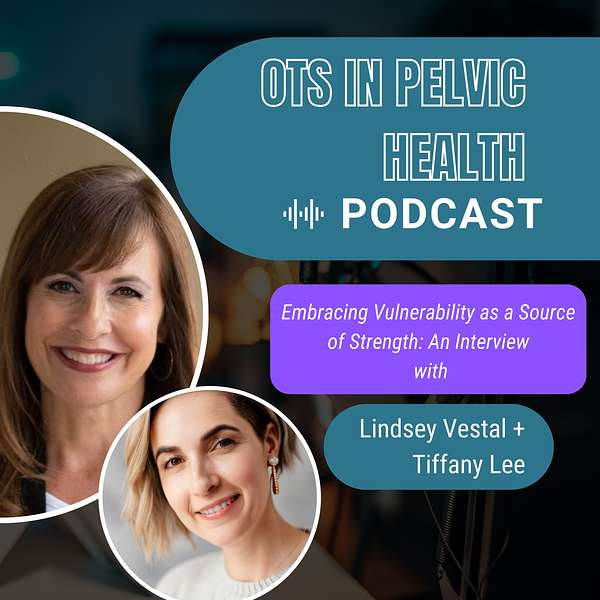
Embracing Vulnerability as a Source of Strength: An Interview with Lindsey Vestal + Tiffany Lee
- Tickets for the 3rd annual "OTs in Pelvic Health Summit" (Aug 17-18, 2024) go on sale Feb 1! Visit here for details.
A little bit about my guest:
Tiffany Lee
How to get in touch with Tiffany:
Email: tiffany@tiffanyleeot.com
Website: https://www.pelvicfloorbiofeedback.com/
____________________________________________________________________________________________
Pelvic OTPs United - Lindsey's off-line interactive community for $39 a month!
Inside Pelvic OTPs United you'll find:
- Weekly group mentoring calls with Lindsey. She's doing this exclusively inside this community. These aren't your boring old Zoom calls where she is a talking head. We interact, we coach, we learn from each other.
- Highly curated forums. The worst is when you post a question on FB just to have it drowned out with 10 other questions that follow it. So, she's got dedicated forums on different populations, different diagnosis, different topics (including business). Hop it, post your specific question, and get the expert advice you need.
More info here. Lindsey would love support you in this quiet corner off social media!
Lindsey Vestal So it is absolutely no secret that Tiffany Lee is the OG of Pelvic health in O.T.. She gave me the confidence I needed to do this work. I took my very first course with her and she looked me in the eye and told me We belong in this space. And my gosh, was she right? She has continued to be such a source of inspiration, advocacy, and an example of beautiful leadership in our community. You can't imagine how honored I was when she asked to interview me for a course that she was taking towards her post professional doctorate, all focusing on leadership. I'm sharing with you today that conversation, that interview which neither of us knew we would be sharing outside of her doing her research. The conversation is really informal and really off the cuff. I wanted to share it with you as kind of a window or insight into my own thoughts regarding advocacy in our profession and how we each take the meaning of leadership a little bit differently. And I love that. It's very rare that I get interviewed. I'm usually the one who is so privileged to speak to so many amazing, incredibly talented people in our community. I thought it might be nice to hear a short episode today sharing a little bit about my background and sharing some some vulnerable aspects to my career trajectory. So without further ado, I thank you, Tiffany Lee, for not only taking the time to interview me, but for all of the inspiration that you have not only given me, but all Pelvic health OTPs. We Love you.
Intro New and seasoned OTs are finding their calling in Pelvic health after all, what's more ADL than sex, peeing and poop? But here's the question. What does it take to become a successful, fulfilled and thriving OT in Pelvic health? How do you go from beginner to seasons and everything in between? Those are the questions and this podcast will give you the answers. We are inspired, OTs. We are out of the box, OTs. We are Pelvic health. OTs I'm your host, Lindsey Vestal and welcome to the OTs and Pelvic health Podcast.
Tiffany Lee Okay. So the first question, ma'am, is tell us a little, little about your professional career.
Lindsey Vestal Do you want to go before O.T. or just start with O.T. to you? All right. So I was an English undergrad and I really enjoyed writing, but I also was a choreographer and a modern dancer. And I always thought of those things as fun and writing as work. And so I got a job as a technical writer at a software company. And at the same time, I was still involved with my undergrad university doing choreography and dancing. So then I realized I didn't have to delineate the two as fun and work, and I could combine the two. So long story short, I found O.T., which was not easy, but I was going to be a T, and I discovered Pelvic health because of some some issues my father was going through. So it became very personal and passion for me to recognize that I could make money doing something I loved because I guess I don't think I thought that was possible. And obviously I wasn't dancing and caught and choreographing, but I very much feel like my skills that I use in O.T. are a form of that, especially as OTs were taken to task analysis and as a modern dancer, that I did a lot of that. Interestingly enough, my director of the dance company Lives just moved to Colorado and I'm in Colorado right now. And when I was doing work yesterday for the new trauma informed public health certification, I'm developing, I was doing a lot of research on neuro suction and intersection, which is basically the ability to understand emotion. And when I was doing modern dance, my the director I just reconnected with was big into something called Laban notation, which is deciphering how movement evokes emotion. And so it seems maybe on the surface level not connected for for me it's very connected. I see these themes of interpreting emotion better, understanding how emotion is read in the body. Feeling safe and feeling at ease. And so it took me a little while to get there. But when I finally did and I realized I could make money doing something that was a thread in many aspects of my life, and I really felt like I found home.
Tiffany Lee I loved that. So then I remember you that at some point. But I had forgotten that I loved dance. I mean the dance in high school and with the head of the team. And I love to choreograph and it was just so fun. And I always thought that's what I wanted to do. So at now I'm so inflexible and can hardly wait.
Lindsey Vestal To really build on what I've got.
Tiffany Lee Yeah. So I've had fun with all these weddings. We just did another Mamma mia dance to Dancing Queen on Saturday night, so I'm having fun choreographing for my friends and doing dorky little two minute dances. But that's number two. What is one thing that most people don't know about your leadership journey?
Lindsey Vestal That I am very much an introvert and have struggled with not only speaking up for myself, but for speaking up for others. And as someone who, thanks to Tiffany, he gave me the courage to represent OTs. I guess I am in some version of a leadership role, which means I do have to speak up for people who don't have a voice or maybe think we can't do this work because the work we do is a bit of an underdog. And so as someone who very much likes to people please very much wants to make sure everything is going well and in whatever environment I'm in. It's hard to be an advocate. And so I'm a reluctant advocate and I'm definitely a extroverted introvert. And I think the older I've gotten, we were just talking about this last night at dinner with my family. The older I've gotten, the easier it's become to be an extrovert because I really see how in the role that I'm in talking to so many OTs who just feel like they're not sure if we can do this. It's just made me more loud and more vocal to recognize that we could. And again, like, I'm not just saying this because you're interviewing me, Tiffany, but like that confidence when you look me in the eye is something that I continue to pass on forward because all it takes is for someone to believe you, believe in you, and to see that it's possible. And you were that for me. And it's such a privilege to be able to do that for others. So I would say, yeah, that I struggle with not people pleasing. I struggle with, you know, people, people not thinking that. I guess the the takeaway is that the greater desire to empower OTs has enabled me to step outside of whatever discomfort and reluctance I had when I was younger because of the greater goal that I think is more important.
Tiffany Lee And you know, it's funny because when you said that I think you're an extrovert in the public health community, but an introvert probably in other areas you seem so comfortable in, you know, whenever you doing podcasts or interviews and you can only fake it. You make it so, so many times and you've I think you've gotten comfortable in that role of being an advocate. So no one would know that you're an introvert.
Lindsey Vestal Yeah, my family definitely knows.
Tiffany Lee Well, and and my husband and not him. He's my extrovert. But my husband and my oldest are total and my soon to be daughter in law. Major introverts. I'm like, ready to go Get to the wedding. Time to go. It's too much, too many people. Let's go sit down. And I'm like, We drive four separate cars, the four of us, to a wedding. Like, I closed it down. Everybody else left. So that's how it works. So you'll see, like, some people are gonna want to stay longer. So it works good. If you drive separately to functions, that's great. Okay. Number three, looking at the study of leadership, many different authors and books are available to read. What are you reading and what have you learned from that author?
Lindsey Vestal Yeah. So the one that comes to mind initially is Dare to Lead by Burning Brown. Yeah, there's so I mean, we could have we could speak for five hours just on, on her alone. But I think that what's coming to mind right now is this idea that you could lead with vulnerability. So I think so many of us and probably because, you know, I'm 45, so for me, so being vulnerable on social social media doesn't relate because me growing up, I saw authority figures as polished, as professional, as buttoned up. And I think that, you know, perhaps people younger than me recognize that there's a lot of strength in showing vulnerability. You know, I remember when I had my company in New York City and all of a sudden all these pictures were coming out of what a real pregnant belly felt like. I looked down, It's what mine look like. Wow. Other woman looked like this. And so this idea that you can be strong by being vulnerable is something that I wrestle with, not because I don't believe it, but because in my mind, authority was always buttoned up and polished. So dare to lead. And specifically, Brené Brown has really enabled me to kind of step into areas that maybe show me not so polished and buttoned up and allow people to see the intricacies of the human being in front of them that perhaps they still respect and maybe put on a pedestal, but recognize that there is so much courage in being vulnerable so that people can see that it's not just something that you put on a pedestal, but that she relatable, that you're understandable and that when you. You feel weak or impostor syndrome, you know, that person has to. And I think that that's a really empowering feeling because the juxtaposition of always being flawless is probably what makes some people feel that they can't step into leadership roles because they view themselves as flawed. So I think marrying those two worlds, and specifically Bernie Brown's book has helped me with that. Another book that comes to mind, I know you only asked for one, but I am a big reader. Two actually. One is leading with kindness, which again, I think probably not so much my generation, but my dad was an executive at IBM and he always and he's a very, very kind person. But I remember coming home from school and would be taking late night phone calls and he would be like yelling at his direct reports. And I remember thinking, to be a leader, you have to be rough around the edges. And I was like seven, 8 or 9, you know, I remember being like, my dad is the bomb, like, well, you know, and also I was a little bit like how did he take that? Like, he's not their dad, you know and so it was funny. And I when I read this book and this was a long time ago leading, Leading with Kindness by Baker, I saw my dad in a new light and recognize that also female and male male leadership is very different. And, you know, there's also so much there about why did he feel like he needed to yell, you know, like there's so much individuality there. He was the youngest of a large family. He probably always had to yell to be heard. So there's a lot there. But that was really influential. And then one of the one I'm going to mention really quick is called Start With Y by Simon Sinek. S i an e k, and I like that because I am someone who loves being an entrepreneur. I love the promise of new opportunities and possibilities. Let's create this, let's build that, Let's make a workshop. And even before I was a leader, when I was just running a private practice in New York City and I met a new Dula and she was offering a workshop. How could I get involved there? A childbirth educator wants to add Pelvic health into her curriculum. What can I do there? And I realized that I was starting to spread myself very, very thin and I didn't have enough energy at the end of the day. And so when I read start with why it helped me refocus how when I was saying yes to everything I was saying, what's the expression When you say yes to everything by default, you're saying no to other things. Whereas if you choose with intentionality what you say yes to, you're putting your energy in buckets that are important to you and that you could prioritize. And I think something people don't talk about very often is, especially for me, it was very easy to be an early and new entrepreneur because I love saying yes. I love saying yes. I love people pleasing. I love the promise of a new opportunity. But when you get to be an intermediate entrepreneur, you have to say no. And that's hard because of that endorphin rush that you get at this new collaboration. So when you step back and before you say yes. So now, before I say yes to things, I always ask for some time and I think about it in my priorities. And, you know, I have a board where I list all the things that are important to me for 24, the year that I'm in, and ask myself, how does that fit into that when this new opportunity arises?
I have some super exciting news for you. O.T. Pioneers ensured a pelvic floor therapy is opening for enrollment January 13th through the 17th, 2025. This is your chance to dive into a 100% online course with lifetime access. You'll get five group mentoring calls with me and two free months inside our off social media private community Pelvic TPP's United. Plus, we're hosting an optional in-person lab in Cleveland on February 21st and 22nd. Please come join over 1500 other OTs who have already taken the leap. I can't wait to see you inside OT Pioneers Enrollment January 13th through 17th 2025.
Tiffany Lee I like that. That's good stuff. One of the authors we are learning from is John Maxwell. You should glance through three levels leading up, leading across and leading down. Can you provide any examples where you used influence to lead up lead across or lead down?
Lindsey Vestal So an example of leading up I think means how are you going to that next level of influence to help your current world? And I would say recently I connected with the Aota President, Alison Stover, and not only was I able to get her on my podcast to for the first time, in her words, speak about what her top six priorities were. I specifically focused on the one that served my community, which is pelvic health. And so I was scared to death to talk to her. But I felt like it was really important for my community to hear it now because she's got she's in she's got a four year tenure coming up. And I feel like the Aota is really slow to roll out things. And one of the reasons why I love being an entrepreneur is not having to go to a board, not having to sit in front of a committee to make decisions. I like moving now and being really agile. And so when I invited her, I was like, Are you ready to talk about this publicly? Can I have you on my podcast? She said, yes. And I think and I hope that it's a beacon of light for OTs, who are on the fence and wondering if we can do this and need that permission from our national organization to be able to feel like they're going to get represented, they're going to get support. And so that is an example of me leading up, an example of me leading down, I think would be I speak to universities several times a month. So I was just at Toro before that. I went to Creighton in person. And basically I love speaking with students who are not sure about Pelvic health are they typically are always good students, so they know they want to be in O.T., but they're not sure the role of Pelvic health. And so I love speaking to students who are in that opportunity or in that point in their life where they're just so open and interested in learning all of the ways that O.T. can influence. And even if there's not one student who's sitting in that room who gets into pelvic health them, just knowing we can do this is so important to me because they walk by and someone says, you know, there's a pelvic floor for that. If they just take a moment and say, And Oti does that too. To me that was worth it. And so in also recognizing that there's things we can do about urinary incontinence, which most people just think there's nothing, there's no hope. I love instilling that hope that there is something they can do. So that's that's my that's my mission. When I when I do when I speak at universities and I was doing and even when I was abroad. But now it's a lot easier because of the time change. So I've really, really been enjoying those connections. And then the last one is leading.
Tiffany Lee What was the cross leading across?
Lindsey Vestal I would say that's me showing up for our Facebook group because it's people who are more much more advanced and experts than I am. It's people who are just starting off and we all meet somewhere in the middle. And so I'm leading across in the sense that wherever you are in your continuum, I've created a safe place where people can express their views, can have interactive conversations. I'm coming up on three years now for the O.T. Empower our. So it's basically creating a space where people can post their, you know, nagging case studies that they're not sure what to do, whatever query they have. It's creating a space where people respect each other and can kind of come together and not have to answer that question. What is an O.T.? What is pelvic health? You're past that and now we can really roll up our sleeves and get much deeper on the things that you want to learn about.
Tiffany Lee I love that. I think those are great examples for sure. And I definitely see you leading in cross and you do a fantastic job. Well, all three really can be. Blanchard offers that leaders need to get over the idea that their term teams think they know everything. The reality is that leaders don't know at all. What role does transparency play in leadership for you?
Lindsey Vestal So that reminds me a little bit of that question we talked about earlier, which is being vulnerable. And I think there is a difference between transparency and vulnerability, although they do they do go hand in hand. I think I guess transparency, I will define as honesty as being clear. So I love this expression. Clarity is kindness. So when you're clear, you're able to be a kind person. And so to me, when things are very clear and transparent, people can understand. Much more so how they want to get involved. How much do they want to roll up their sleeves? Because to be an OtN pelvic health, even if it's not something you set out to do, you do need to be a bit of an advocate. So I had just had a call yesterday where an O. T was like, Hey, how much am I going to have to fight for myself if I get into this? How much am I going to have to justify my worth to get paid to get a job? And it's so interesting because I really respect that question. But that was never a question I asked myself because of how much I wanted to be in this. So but I feel like for people to be able to articulate that is important because if that passion or that burning drive isn't there, it is going to be a very frustrating experience. So I think being clear as a leader can help people understand the depth of involvement. As an example with with that one student. And so I think it starts with being clear with yourself and being very reflective. Because if you're not, you're you can it's funny, we have three I have three dogs in the house with me right now because we're house sitting here and I see this one dog gets into a Furber and the other two just go along for the ride, right? What is it? A new noise of food dropping over here. And I think when we're not clear about our intention, we can get caught up in that wave of excitement and enthusiasm and emotion. Whereas when we start off with clarity within ourselves, start with the why again, that book you're able to to demonstrate that for others and then therefore potentially as a as a community leader and advocate, other people can be clear and certain of their role as well.
Tiffany Lee Perfect. I love that. What is a lesson you learned early in your professional career that has stayed with you?
Lindsey Vestal Yeah. So when I was at NYU, I would say half my professors didn't think I can be an O.T. and Pelvic health and the other half did. And there was a situation where I was, believe it or not, in an emergent emerging practice areas lab, you thought, where else could you bring up an emerging practice area, but then an emergency practice area lab? This was not the case. The professor leading it did not think that he belonged in public health. And so, you know, I was really upset because I knew I wanted to be in this area. And then I went home and I probably cried. And it was the 20, maybe 29. I can't remember it. It was the cover of our o.T practice. And it was two cute little old ladies holding hands walking on the beach. And the title was Incontinence and Our Role and I was like, the thigh and so in my mind, I walked into that professor's office the next day in class, and I just threw that odd practice down on the table and said, I'm going to do this. In reality, I didn't do that. I probably walked in very meek, had the journal in my hand and said, Can I show you something? And I showed it to her and she changed her mind. She said, okay, you know, if our if our, you know, journal is saying this, then then go for it. And so what was the question, Tiffany?.
Tiffany Lee What is the lesson you learn early in your professional career that a state with you.
Lindsey Vestal So the lesson here was sometimes people give you words, sometimes journals give you words that give you that impetus that you know is inside of you, that you just need something tangible to point to. And so for me, it was attending your course. And and then before that it was me getting this journal article. And it I don't think I would have backed down, but I don't think I think I would have done a hybrid version. I don't think I would have just like went right into incontinence in this in this class. Because on the flip side, I had another professor at the same time who said to me, why, why do you want to do this work? I support you, but why do you want to do this work? And I don't remember what I said. I think I said something about improving quality of life and people withdrawing from things that matter to them. And she said to me, So you really like the bio psychosocial aspect of this work? And someone finally gave me a word to anchor into. I had no I, I didn't know. I didn't have a I didn't have a fancy vocabulary term to know why this was my passion. And so that word has really stuck with me and provided me a framework for kind of feeling at ease with my decisions. And so I had this professor who saw me and gave me an anchor, and I had another one who didn't. And so I think that that we don't always have to know exactly where we're headed. But when we have these little influences that give us a word, a look, a journal article that lean into that and allow that to continue to that you find that next step and that next step, because that's often what it is clarity of purpose, feeling comfortable in your skin, recognizing that these are things we're supposed to do, don't always come to us in a lightning bolt from the sky, right? It's not always this like, but I knew the moment I was supposed to be in O.T. It's like, no, for some of us, it's. It's more it's more struggling. And that's absolutely okay. In fact, I think we're stronger when that's the case. So I would say a lesson I learned early on in my career is to not necessarily think things are always black and white and so clear. But when you do find these moments of anchoring, allow them to fuel you and give you purpose for that next challenge.
Tiffany Lee Amen. I love it. I love it. I love it. And I remember that exact that exact journal. Hi, everybody. Yup, yup.
Lindsey Vestal Jeanette Triggs I think.
Tiffany Lee With that I.
Lindsey Vestal Think it was um. Yeah. Brendon Newman. Brendon Newman and
Tiffany Lee Brendon and I. So we, we actually taught at AOTA about it. I mean, gosh, I was like 2002. I don't even know when it was, but we did a whole course together back then and then we tried again and something happened. She something happened. It was someone in her family. So I did it by myself. It was like a three hour work. And it was like when the first times ever and she's like, I can't come. And so I was like, okay. So anyway, she's she's really neat.
Lindsey Vestal I met her at Marquette. I took a course with Jeanette , and I was like, my gosh, you're the person who wrote that article. Yeah. Yeah.
Tiffany Lee Okay. Number nine, finally, what final thoughts do you have for the next generation of leaders? So the next the thoughts for the next generation of leaders.
Lindsey Vestal Maybe that leadership doesn't always have to look the way you were first introduced to it. So it doesn't have to be that dad who's yelling at night on a phone call. It doesn't have to be anything that you associate with being a leader. Sometimes it just means sticking up for what you believe in. Sometimes it just means believing in yourself and finding that resilience to take that next step. So allow what being a leader means to be redefined for you daily. Because there's moments throughout our day to to embody it. And you know, don't be shy because we all are leaders in moments could be in our. Munity it could be. Being a parent, it could be owning a dog. There's moments where you are a leader. And while it may not look like Oprah Winfrey or the president of the United States, it's allow those moments where you truly have a gift to give to to step into that and to allow others to flourish because of it.
Tiffany Lee I love it. That was amazing.
Lindsey Vestal I hope you enjoyed our conversation on leadership. Like I said, it was a little surreal being interviewed about leadership from someone who has been a leader in the field and really has been a beacon of light for occupational therapy, presence and pelvic health on so many levels. This was a conversation that I had no no idea I would end up airing. And so please forgive the off the cuff, informal nature of it. But I think it's also really fun to to kind of get a peek into those type of conversations as well. Stephanie is still offering courses for OTs. And in fact, the course I took with her was her biofeedback course. So if you're interested in checking out the work that she's putting out in the world, you can go to pelvic floor biofeedback.com. You can also reach out to Tiffany directly. I have her email in the show notes wishing you all a beautiful day.
Outro Thanks for listening to another episode of OTs and Pelvic health. If you haven't already, hop on to Facebook and join my group OTs for Pelvic health, where we have thousands of OTs at all stages of their Pelvic health career journey. This is such an incredibly supportive community where I go live each and every week. If you love this episode, please take a screenshot of this episode on your phone and posted to IG Facebook or wherever you post your stuff and be sure to tag me and let me know why you like this episode. This will help me to create in the future what you want to hear more of. Thanks again for listening to the OTs and Pelvic health podcast.
