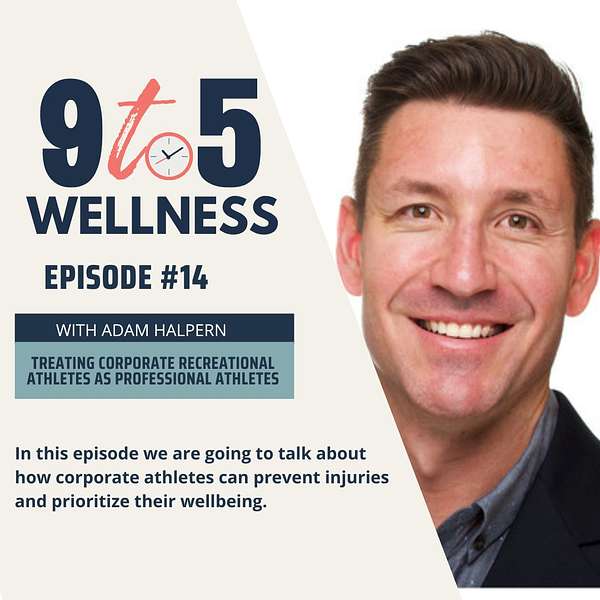
9 to 5 Wellness
Do you have the knowledge you need to help your organization get the best return on the time and capital invested in employee wellbeing? Are you a busy professional or C-suite leader looking to introduce wellbeing program at your work?
Discover the art and science of helping organizations grow their most important resource, their people. In this podcast we discuss how organizations can utilize the potential of wellbeing programs to deliver high return on investment (ROI) to employers. We talk about the radical impact that holistic employee wellbeing programs can have on overall quality of work and productivity. We will be sharing insights on investing in human capital. Such as:
🌟 What has helped their organizations gain a competitive advantage?
🌟 How they see the future of employee wellbeing?
🌟 Misunderstandings that are out in the corporate market today
🌟 Advice to other leaders to create a happier, healthier, and more productive workplace
Our guests are C-suite leaders, and wellness innovators across the value chain: HR managers, wellness champions, community wellbeing ambassadors, service vendors, and wellness consultants.
9 to 5 Wellness
Treating Corporate Recreational Athletes as Professional Athletes
Fortunately, there is huge increase in exercise to prioritize their health and as a hobby among millennials and Gen Zers. Former collegiate athletes who are now working in a corporate setting and they try to maintain their fitness levels and they become recreational athletes.
Recreational sports participation provides many potential benefits to individuals including improved metabolic health, physiologic functioning, social interaction, and mental health. It helps corporations cut on healthcare costs and mostly employees can see some of that money reimbursed to them. It’s a very beneficial trend all around.
However, sports participation comes with injuries. In 2022, sports and recreational injuries increased by 12%.
In this episode we are going to talk about how corporate athletes can prevent injuries and prioritize their wellbeing with our guest, Adam Halpern , an athletic trainer and who has worked at Stanford University and with the USA Ski Team. He is the founder of WaveOn™ Health.
You will learn :
Who are athletic trainers?
Difference between a recreational athlete from professional athlete.
How athletic activities can help busy professionals at work.
How can WaveOn Health support corporate recreational athletes?
You can learn more about Adam at https://www.linkedin.com/in/adamhalpern/
LinkedIn: https://www.linkedin.com/company/37268629/admin/
Facebook: https://www.facebook.com/WaveOnHealth
Twitter: https://twitter.com/WaveOn4
Instagram: https://www.instagram.com/waveonhealth/
Website: https://www.waveonhealth.com/
If you liked this episode and would like to learn more about wellness training and workshops offered by 9 to 5 Wellness, email us at info@aeshathair.com
You can learn more about our programs at https://toneandstrengthen.com/workshops-trainings/
You can learn more about Aesha at https://www.aeshatahir.com
🌟 🌟 🌟 If you liked this episode and would like to learn more about wellness training and workshops offered by 9 to 5 Wellness, email us at info@aeshathair.com. You can learn more about our programs at: https://toneandstrengthen.com/workshops-trainings/. 🌟 🌟 🌟
My passion is helping organizations create a culture of wellness, and I do this by setting up health programs that prioritize the most important asset they've got – their employees. Cheers to a healthier and happier journey ahead!
🌟 🌟 🌟 You can learn more about ME- the host at https://www.aeshatahir.com
Follow me on IG and LI to learn more
Welcome to the nine to five wellness podcast, a show about corporate wellness solutions with innovators and forward thinking leaders who are at the forefront of the workplace wellness movement. I'm your host Ayesha Tahir.
Hello, everyone. Today on the show, we are going to talk about corporate recreational athletes and how they can prevent injuries and prioritize their well being. To learn about this , I have a very special guest with me Adam Halpern, who is an athletic trainer, and Adam has worked at Stanford University and with the USA ski team.
He is also the founder of wave on health. We are going to talk more about wave on health today as well. And how he's making an impact through that. Organization. He believes athletes of all ages and abilities should be treated like professional athletes. Welcome Adam. I'm so excited to have you here today.
No, thank you for having me. I appreciate it. Looking forward to talking about what we're doing.
I'm excited to learn more about athletic training as a profession and who athletic trainers are. So, you know, let's just start there.
So some people have been in organized sports and there's always this person kind of in the background that helps with What I call their athletic health care.
So athletic trainers are allied healthcare professionals. It is now a master's level entry degree. You then have to become nationally certified and in 27 states or in 48 states, you are licensed underneath the standing orders of a physician. So the easiest way to understand who athletic trainers are, if you watch any sporting events.
From high school football to the NFL to the NBA. And if an athlete goes down on the field, the people that are waved onto the field, they're actually athletic trainers. It's not orthopedic surgeons. It's not physical therapists. It's this unique dynamic that athletic trainers are supporting. The health of the athletes and they're that go to person.
And then if it's a severe enough injury, then the athletic trainer actually weighs on the doctors, but athletic training has been around for 70 plus years. It has been really successful and I worked at the highest level. So I know the overall value.
Wonderful. So what are some of the professional settings where athletic trainers work?
The traditional settings, because this is big within our profession, are what I call institutional sports, high school, college. Professional sports, Olympic level, but now athletic trainers are starting to step outside of institutional sports and they are supporting more of the industrial athlete. So they work within big corporations the Amazons of the world Boeing.
There's a lot of athletic trainers that work with those types of industrial athletes. They're getting into tactical, so military, fire, police, they own their own business. Sometimes they get into medical sales just because of our background and knowing the health care system, but traditionally, they're within the sports teams that you are watching on TV.
I like it that there is diversity now within the field, you guys are going out and working in different settings. So what I take from this is that athletic trainers are the frontline healthcare providers, especially in the organized sports settings. But now we are also seeing an expansion of their, role into I've heard in medical departments , and public safety,
. So I want to talk about the recreational athletes who are, you know, working full time and they have a day job, but then they also have a passion to train and compete in different sports. I'm a runner myself, marathon runner , and kind of understand how,
striking the balance is hard. And also when you're suffer, when you suffer an injury, it becomes even harder to take care of yourself and prioritize your wellbeing. And on top of it, I, I've seen a huge increase in exercise to prioritize health, and even as a hobby among millennials and Gen Zs, which is a very welcoming trend.
But how would you differentiate a recreational athlete from a professional athlete?
Yeah, how I define it and how our company defines it. A professional athlete is someone that gets paid to perform a sport to win a world championship, a national championship. That's kind of what a professional athlete is.
A recreational athlete is someone that has the same passion. They can have the exact same injuries, so they can have the same problems as the professional athletes, but they have a side job, right? Which is really their main form of income. And they just have this passion to make them a recreational athlete.
So as we've gone through all of our growth and our customer discoveries, there are. 24 million, what we call everyday athletes, which are these passion athletes. And those are people that have this passion. They're already tracking their progress. They're using a wearable to make sure that they know that they're getting better.
And then they are already spending money, 125 in fact, on membership, equipment. Travel, entry fees, or private coaching. So those are really the recreational athletes and they go from 14 years old, all the way up to 90. You can have the elderly population running their 30th marathon. They can be playing golf.
They can be skiing with their family. All of those athletes are still focused on whatever passion, whatever that it gets them out of bed in the morning. They just don't get paid millions of dollars to be a professional athlete.
That's a really good differentiation. And I would like to say that the fact that you just mentioned that they're spending around 125 a month.
I think the recent data that I saw, it suggests that they're spending around like 300 a month at this point. So, you know, it's a huge industry and it's good. It's really good for everybody involved, like the athlete themselves for their health and wellbeing for the organization that they work for having, , a healthy hobby like that, , for the economy.
So I'm just, Curious how athletic activities can help busy professionals at work. What kind of life skills are they developing through the recreational sports that they're bringing back to work?
Yeah. I mean, if we look at the industrial health model, if someone is playing sports on the weekend from basketball with their kids, maybe they're in an adult soccer league, they're running five K's to marathons, they're keeping their level of excitement high.
And that personal drive and goal. So when they come back to work on Monday or Tuesday, they're really energized and they're able to do the workload. However, when someone does experience an injury, which it happens in sports, right, the body's not indestructible. It does have that negative impact on absenteeism, decreased productivity, and that's where the company can suffer.
So if we look at the industrial health model. To have companies incorporate the type of resources that their employees are staying active on the weekends. And if something happens to them, they're integrating a resource to keep those employees healthy. So when they come back to work, their productivity has been increased and their absenteeism has gone down.
So that's where the companies really want to focus on the person. Who's the employee instead of just the employee first.
That's a great point when they do get injured, it could be costly to the organization, but organizations can take a step here and try to see what they can do to prevent the injuries or even treat the injuries.
I was reading an article in preparation for our interview, and I came across the statistic that in 2022, sports and recreational injuries increased by 12%. And this is only the ER visits. This is not like the urgent care data or people going to their regular doctors.
So how can corporations really support these athletes? Give us some tips.
Urgent care and the emergency room are valuable. However, a lot of the injuries are not severe enough that they have to go to the ER or urgent care. They just need to have access to someone like an athletic trainer that has dealt with thousands and thousands of musculoskeletal athletic related injuries to really provide a peace of mind so that athlete understands how severe it is.
What they could do now. And then if it is severe enough, they would be able to escalate them to the specialist to support the injury. And I think that's just a unique model that companies can provide is how can they have an athletic type resource, athletic training type resource available to all of their employees that if they are running a marathon and they start to experience knee pain, if they can provide early intervention to that runner, It will actually decrease long term high medical expenses because that athlete didn't ignore it, hope it would get better, and then it escalated into a pretty high medical expense.
And the healthcare expenses are one of the biggest costs for the organizations. So you know, they can save on that. and increase their bottom line through that. That's perfect. Tell us about wave on health. What does it provide and how can it provide corporate well being for corporations?
So Wave On Health is a one of a kind company. We're really creating a virtual athletic trainer. And the reason we're doing that is we're leveraging technology and licensed athletic trainers that are all over the country to create a technology assisted athlete health service. So what I mean by that is, athletic training as a profession and individual athletic trainers like myself, we really manage The athletic health of people and of athletes, and that ranges from prevention, early intervention, injury management, specialist referrals, and then recovery to get back to whatever sport they're focused on.
And if we look at the corporate model, and if they have employees that are doing whatever sport. We're able to support that employee who is an athlete wherever they are along that journey, and it's going to decrease the medical costs because we're able to keep them out of the health care system when it's unnecessary.
But then if it is severe enough, we're able to get them to a specialist. As quickly as possible, which decreases the unnecessary copays, unnecessary images that were able to just go directly to an orthopedic surgeon, as an example, and then what the healthcare system currently does is once you're discharged.
They're literally done with you, but we can swoop in and help an athlete understand what they need to focus on in a recovery state stance to get back to whatever sport they wanted to do. And all of that has lost long lasting impact and actually long lasting cost savings to a corporation.
That's wonderful.
Tell us a little more about the functionality of. Wave on health and how the technology is being incorporated.
Yeah. I mean, it's 2024 COVID impacted the use of technology, telehealth, telemedicine. When we're talking about wave on health, we're not just focusing on telemedicine and an injury. Still. state.
We're looking at the prevention area that is not defined as the telemedicine injury model. So by giving that early access to an athletic trainer to all of the employees within the corporate model, as soon as they start to have discomfort or an acre of pain, that's when we can help them. And that's when I mentioned the early intervention by providing early early intervention, we can actually prevent Long term injuries.
So the athlete would be interacting with us via technology. There's already digital tools that allow us to do assessments, evaluation, communication. So the athletes or the employees can be working or training anywhere, and then they can get treatment everywhere. So that's why we're doing something that no one else is.
The telemedicine is once you're sick or injured, you can communicate with a provider as an extension outside of their. Medical clinic, but they don't really do a lot focusing on the early shoulder discomfort or my low back doesn't feel well, that's just not the healthcare model. Healthcare is actually sick care, right?
Once you're sick or injured, it kicks in where we're focusing on that end to end comprehensive solution and just allowing technology to scalable exponential manner.
What I'm hearing is that you're preventing people from actually you know, you're not really going to the into the healthcare system unless it's very necessary.
And also you're catching them at a time where, a future injury is preventable, right? Like I, I was just running today and my right hip is a little wonky as I joined a dysfunction, but, it, it started, I had like a little nagging, you Pain . Now, if I was working with a company who had wave on health, I could just go to the athletic trainer, do some corrective exercise.
And, you know, be better. So that's what I'm hearing from you. And that's, that's a wonderful way to save money , all the way around, really, just not, not just for the organization, but for the patient to or the athletes too, because they don't have to suffer with that lingering pain because, normally we just sit on it, like, We're just going to wait to see, oh, is it going to get better or is it going to get worse?
And once it gets worse and you can't really take it anymore, then you're going to go to the doctor. So having that middle kind of middle man, right? Who can actually prevent those injuries from happening. That's awesome. So tell us more about WaveOnHealth. Where else WaveOnHealth is being employed and how is you know, this system actually helping even professional athletes?
I'm gonna, I'm gonna dive down a little bit deeper to what you were mentioning, which, Parlays into the last question you just asked. When we talk about institutional sports where athletic trainers exist, those athletes are able to ask us quickly at that earliest form of discomfort or acre pain, what you're highlighting is the recreational athletes have the same problems.
As the professional athlete, right? A shoulder is a shoulder. A hip is a hip, knee, ankle, low back, even a concussion. It's all the same. The difference is. Recreational athletes don't have the same solution to the problems as pro athletes. So their solution is exactly what you said. Well, it's bugging me, but I'm just gonna ignore it.
I'm gonna hope it goes away. Well, that didn't work. Let me ask my friends and family what they did. Well, that still wasn't helpful. Now I'm forced to search Dr Google looking for an answer. And when none of that works, they're then forced into health care, which is really sick care because it takes a lot of time, costs a lot of money, and it's really reactive.
It's not focused on providing that proactive, preventative model. So where we are going, we're starting with The schools across the country that either have an athletic training shortage, because there's a shift in our profession, which is another conversation. So, there's a rise in student athletes from NIL, right, name, image, likeness, to the transfer portal.
Everyone thinks they can make money just for being an athlete, but the profession of athletic training is leaving organized sports and they're going into corporate medicine, they're going to work for themselves. There's a big opportunity there. And then as we validate everything that we're working on and getting more testimonials and showing that we're keeping athletes healthier, we can then really expand to all of the corporate employees to have a private athletic trainer in their pocket.
So if there's anyone listening that is interested in what we're talking about, because they sponsor marathons or they spare sponsor five Ks and they have 200 employees every single year running in events. We can help the retention. So they all finished the race. So then they're all doing the team building exercises, having fun together, and we're keeping them healthy because we're decreasing those overall healthcare costs.
So we're doing something cool. That's why it's fun to talk about it. We just need organizations that are like, this is really important for our employees because we do have a lot of athletes from running triathlons. Weekend soccer, they go on family ski trips. We can really support any athlete because athletic training works in all sports across the globe.
So if somebody is interested in learning more about your organization and want to get in touch with you, how can they do that?
Easiest way to get ahold of me is, I mean, LinkedIn, Adam P Halpern, you'll see me there or waveonhealth.
com. We have multiple ways to send us inquiries to learn more about it. You can find us on social media everywhere. WaveOnHealth, but the website is probably the easiest way to get connected with us. Just WaveOnHealth. com.
Yeah, right. Great. I'm going to include the links in the show now so that everybody can access them.
Adam, any parting thoughts?
No. I mean, I appreciate being on. It's always fun to talk about real innovation. We've been doing something that. Has never really been thought of, like, how do we commoditize the athletic training profession? So I've been on national boards. We're gaining a lot of interest and a lot of success from just kind of pushing the envelope.
So status quo, right? My, my why is to find a better way and bring it to the masses. So hopefully someone's interested. I did mention my email Adam at wave on health. com. You can find me there, but. We want to help as many people stay healthy and active and we believe all athletes should be treated like pro athletes and it's just never been done before.
So we're, we're the first to market helping all the employees that are focused on whatever performance goal they have. Let's keep it going. Let's keep you healthy and active.
Yeah. All athletes should be treated as professional athletes because there's no difference just that you're not, you're not getting paid for it.
Competing. And congratulations on , really making an impact through wave on health and being on the boards. I'm really excited about this company and the work that you're doing. And you're right. It's something that hasn't been done before. You're changing the way the athletes in general just access health,
I'm super excited for you and your organization again. And thanks for sharing your email and thanks for being on the show today. Really. This was wonderful.
Thank you. I appreciate it. I look forward to keeping the conversation going.
If you like this show today, please share it with your friends and family members. And don't forget to subscribe to our show so that you can get fresh episodes every week.
