Unprofessionalism
Professional performance is exhausting. Maintaining the mask. Editing ourselves. Pretending we know when we don't.
This podcast is about people who dropped the performance. And what happened next.
Each episode features someone who broke professional conventions and found something better on the other side: the executive who disclosed grief in a corporate setting and found it opened new ways of relating; the coach who realised her authority came from integrity, not compliance; the designer who ignored the 'approved tools' and saved thousands of hours.
Conversations circle around three questions:
- What does it cost us to perform professionalism instead of showing up as ourselves?
- How do we create spaces where people can bring their full attention and humanity to work?
- When is the “unprofessional” move actually the most responsible one?
If you feel the tension between who you are and who you're expected to be at work, this podcast shows you what happens when people stop managing that tension and just stop performing.
Hosted by Dr Myriam Hadnes—behavioural economist and founder of workshops.work. New episode every week.
Unprofessionalism
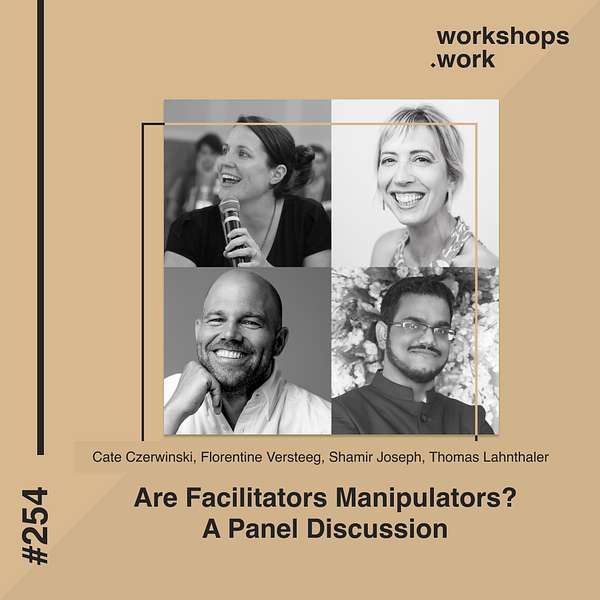
254 - Are Facilitators Manipulators?
Master-manipulator, con-artist… facilitator? When we think of manipulation, facilitation is probably the last thing that springs to mind. We are neutral, we are trusted shepherds, we encourage emergence! So where does the line between manipulation and facilitation start, and where does it end?
This week, my brilliant colleagues Thomas Lahnthaler, Cate Czerwinski, Shamir Joseph and Florentine Versteeg sat down with me to examine this ethically grey, but endlessly fascinating area.
We explore manipulation in its many, inconspicuous guises: mysterious agendas, influencing the process, the facilitation tools we deploy, practising self-awareness, power dynamics and navigating participant consent.
Find out about:
- Where manipulation and facilitation meet, overlap, and the ethical danger zones to be cautious of when facilitating
- Why manipulation in a facilitation context becomes a causal sequence of: purpose, presence, power, process, participants and play.
- Why practicing self-awareness and presence is crucial to be able to navigate the needs of the group, the client, and yourself
- The power we possess as facilitators, and why obtaining consent at the beginning of a workshop is crucial to earning trust
- Why the predefined roles that participants adopt can stifle the process and prevent new perspectives from being explored.
Don’t miss the next episode: subscribe to the show with your favourite podcast player.
Links:
Watch the video recording of this episode on YouTube.
Connect with the guests:
✨✨✨
If you miss the "workshops work" podcast, join us on Substack, where Myriam builds a Podcast Club with monthly gatherings around old episodes: https://myriamhadnes.substack.com/
