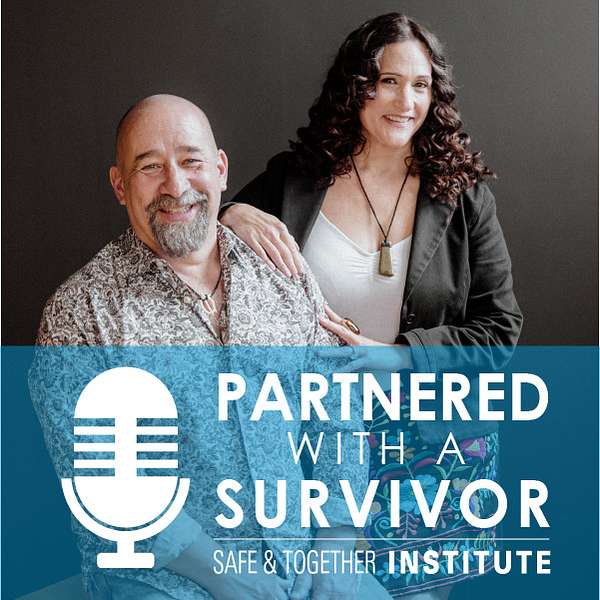
Partnered with a Survivor: David Mandel and Ruth Reymundo Mandel
This podcast is a series of conversations.
What started as a series of intimate conversations between Ruth and David that ranged from personal to professional experiences around violence, relationships, abuse, and system and professional responses which harm, not help, has now become a global conversation about systems and culture change. In many episodes, David and Ruth are joined by a global leader in different areas like child safety, men and masculinity, and, of course, partnering with survivors. Each episode is a deep dive into complex topics like how systems fail domestic abuse survivors and their children, societal views of masculinity and violence, and how intersectionalities such as cultural beliefs, religious beliefs, and unique vulnerabilities impact how we respond to abuse and violence. These far-ranging discussions offer an insider look into how we navigate the world together as professionals, as parents, and as partners. During these podcasts, David and Ruth challenge the notions which keep all of us from moving forward collectively as systems, as cultures, and as families into safety, nurturance, and healing.
We hope you join us.
Have an idea for a podcast? Tell about it here: https://share.hsforms.com/1l329DGB1TH6AFndCFfB7aA3a1w1
Partnered with a Survivor: David Mandel and Ruth Reymundo Mandel
Season 4 Episode 12: Research That Puts Survivors at the Center
Historically, research hasn’t always involved or benefited the population being studied. Dr. Elizabeth Dalgarno, the director and founder of the SHERA Research Group, is a staunch advocate of research that is undertaken by and with the people it concerns rather than “on” them.
In this far-ranging interview, Ruth, David, and Dr. Dalgarno discuss:
- SHERA’s research into health effects on survivors of their family court involvement in Brazil and England (spoiler alert: The negative health effects of family court involvement for domestic abuse survivors is significant!)
- What practitioners can do differently within the current context of family law environment to improve outcomes for child and adult survivors
- How to use research to help improve the social care and family court response to domestic abuse
- The need for greater accountability and transparency as it relates to systems that impact survivors
- The need for appropriate credentialing, training, and experience for evaluators in the family court context
- The need for adequate data on the impacts of family law policies and practices on victim-survivors
- The global need for domestic abuse-informed training for lawyers, children’s representatives, and judges around family violence, custody, and access
The SHERA Research Group is a collective of multidisciplinary professionals with over 100 years of cumulative experience working in health inequalities, law, finance, social care and domestic abuse research and support organizations.
Dr. Elizabeth Dalgarno is the director and founder of SHERA Research Group and a lecturer at the University of Manchester, England. Dr. Dalgarno has worked in public and private health and social care for over 20 years and specializes in challenging inequalities and systemic challenges in health and social care. Her work with women who have been through family court focuses on their health-related experiences and the harmful pseudoscience of so-called “parental alienation” and has been featured in the documentary Mums On The Run: Failed By The Family Court.
Now available! Mapping the Perpetrator’s Pattern: A Practitioner’s Tool for Improving Assessment, Intervention, and Outcomes The web-based Perpetrator Pattern Mapping Tool is a virtual practice tool for improving assessment, intervention, and outcomes through a perpetrator pattern-based approach. The tool allows practitioners to apply the Model’s critical concepts and principles to their current case load in real
Check out David Mandel's new book Stop Blaming Mothers and Ignoring Fathers: How to Transform the Way We Keep Children Safe from Domestic Violence.
Visit the Safe & Together Institute website.
Start taking Safe & Together Institute courses.
Check out Safe & Together Institute upcoming events.